

Most people put off a broken tooth for as long as they can. Not because they’re scared of the dentist’s chair but because they remember what fixing a tooth used to involve.
One of our patients still remembered her mother’s stories from years ago: a cracked molar, a temporary cap that felt like a hard little pebble stuck between her teeth, and a two-week wait while a lab across town made the real crown. Then a second appointment, just to glue it in. Two visits. Two weeks of chewing carefully on one side. All for a single tooth.
So when her dentist said, “Let’s just fix it today,” she laughed. “Today, today? Like, right now?”
“Right now,” he said. “Give me about ninety minutes.”
Here’s what actually happened in that chair and why more and more dental clinics are able to offer this now.
Step 1: A Scan Instead of Gooey Putty
The part everyone dreads a tray of thick, cold putty pressed into your mouth while you try not to gag never showed up. Instead, the dentist used a small handheld scanner, a bit like an electric toothbrush, and gently moved it over her tooth.
In under three minutes, a complete 3D picture of her mouth appeared on the screen every groove and edge, easy to spin around and zoom into. This is what dentists mean by digital twin dentistry: instead of a plaster mold sitting in a box, the dentist now has an exact digital copy — a “twin” — of your teeth on a computer. Nothing has to be shipped anywhere. Nothing can dry out, warp, or get lost in the post. The copy on the screen matches your real mouth down to the tiniest detail.
“That’s your tooth,” the dentist said, turning the model with two fingers on the screen. “Now watch what we do with it.”
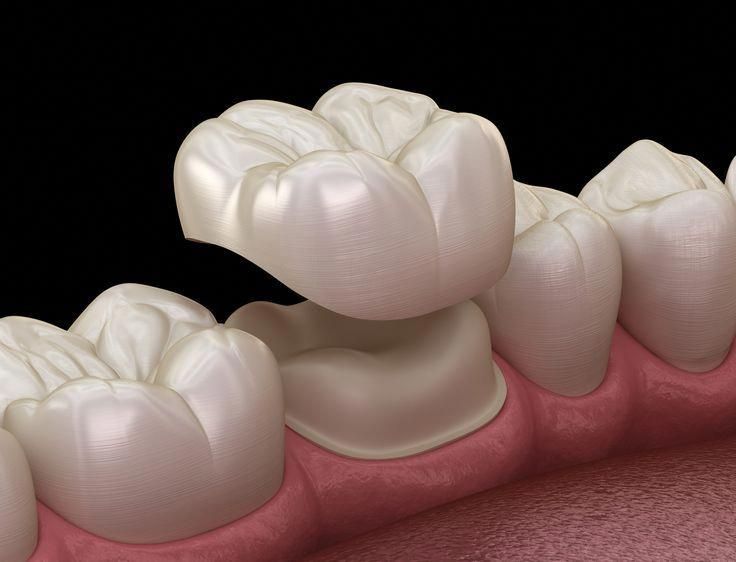
Step 2: Designing the New Tooth on a Computer
What happened next looked more like an engineer drawing a part than a dentist at work. Using CAD CAM dental restoration software computer programs built for designing and then making dental pieces the dentist marked out where the old filling had failed. The software then suggested a crown shape based on the exact form of her bite: how her opposite tooth meets it, how food should slide off it instead of getting trapped, and how to make it look like a real tooth instead of a plastic cap.
The dentist adjusted a few edges on screen, and within minutes had a crown that fit not just the one tooth, but her whole bite the way her jaw naturally closes, day after day. No guesswork. No lab technician somewhere else trying to read a paper form. Just the dentist, the software, and her digital twin, fine-tuned until it looked exactly right.
“In the old days,” he told her, “we’d send this design off in a box and hope it came back matching. Now the ‘box’ is a printer sitting right behind that wall.”
Step 3: The Printer Does the Rest
This is the part that surprised her most. The finished design was sent wirelessly, in seconds to a small 3D printer in the next room, no bigger than a microwave. It quietly built her new crown layer by layer, using a tooth-coloured material, stacking hundreds of paper-thin layers on top of each other.
A 3D printed dental crown isn’t cut from a solid block or poured into a mold the old way. It’s built up, one wafer-thin layer at a time, straight from the design on the computer so the finished crown matches that design almost perfectly, down to a fraction of a millimetre. She went to grab a coffee. By the time she was back, the crown was hardening under a UV light, and a technician was giving it a quick polish and matching its colour to her other teeth.
Ninety minutes. Start to finish. One visit.
Why This Changes the Whole Visit
What struck her most wasn’t just the speed it was how ordinary it all felt. Like ordering something online and having it arrive before she’d even finished her coffee. No temporary crown to baby for two weeks. No second appointment to squeeze into a busy week. No waiting on a lab, and no phone call two weeks later saying it’s finally ready.
A same day dental crown simply means every step scanning, designing, printing, and fitting happens in one visit, in one building, while you’re still sitting in the chair. Dentistry has finally caught up to what we expect from almost everything else these days: if it can be designed on a screen, it can be made right away, without waiting in a queue.
Walking Out With a Finished Smile
By the time the dentist checked her bite one last time a thin strip of coloured paper between her teeth, a few gentle taps the crown wasn’t a promise of something still to come. It was already there, already hers, already doing its job.
She ran her tongue over it on the way out, half expecting it to feel strange, the way the old temporary caps used to. It didn’t. It just felt like a tooth.
“No second appointment. No temporary crown Just come back in six months to say hello.”
She left chewing on both sides for the first time in weeks a small, everyday convenience made possible by a scanner, a screen, and a printer quietly doing in ninety minutes what used to take a village and a fortnight.