
How Artificial Intelligence Detects Cavities and Gum Disease Early
Artificial Intelligence (AI) is everywhere these days. It can write emails, recommend your next binge-worthy show, and somehow always knows what you want to shop for. But one place where AI is making a real difference not just a trendy one is dentistry.
When people hear the term AI in dentistry 2026, the first question I usually imagine is, “Wait… is a robot checking my teeth now?”
Thankfully, no!
Your dentist isn’t being replaced anytime soon. (Good news for us dentists! ) Instead, AI is becoming a powerful assistant that helps us detect dental problems earlier and more accurately.
So, what exactly is AI dental diagnosis?
Think of AI dental diagnosis as having an incredibly smart second opinion. AI is trained using thousands of dental images and patient records, allowing it to recognize patterns associated with cavities, gum disease, bone loss, and other oral conditions.
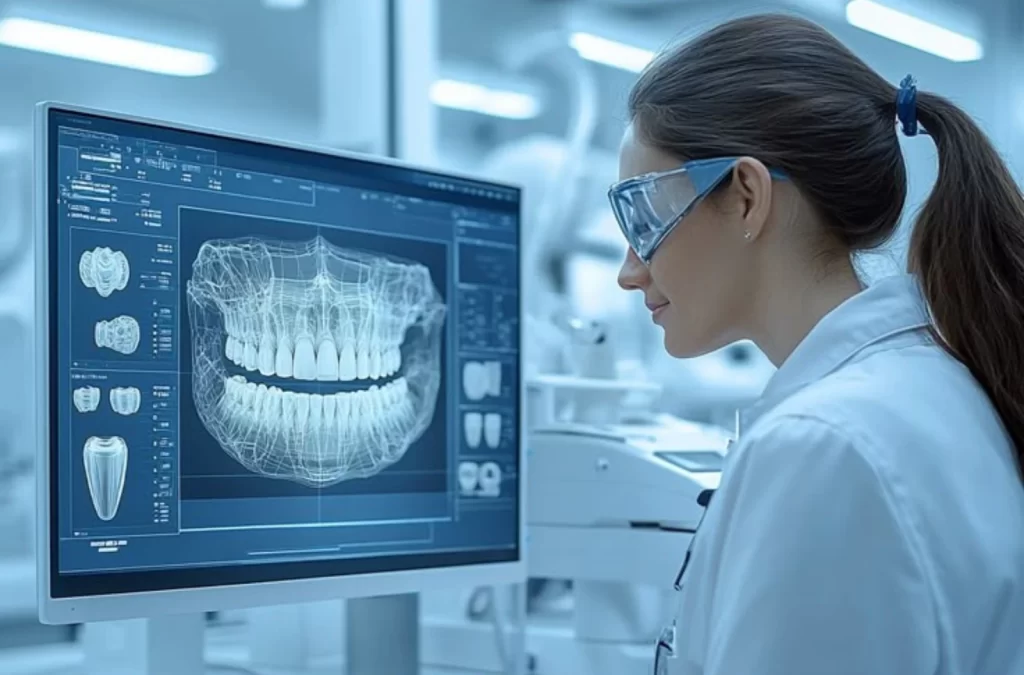
When we upload an artificial intelligence dental X-ray, the software analyzes the image within seconds and highlights areas that deserve a closer look. It doesn’t tell us what treatment to do it simply points out things that could otherwise be easy to miss.
And honestly, having another pair of “eyes” is never a bad thing, especially after a long day at the clinic!
AI Cavity Detection: Catching Problems Before They Hurt
One of the most exciting uses of AI is AI cavity detection.
Let’s be honest—most people don’t visit the dentist because they want to. They usually come in when something starts hurting.
The problem is that cavities don’t become painful overnight. They quietly grow for months before finally deciding to ruin your weekend.
With AI, tiny areas of decay can often be detected much earlier on dental X-rays. That means we have a chance to treat the problem before it becomes a large cavity, a painful infection, or even a root canal.
And trust me, everyone prefers hearing, “It’s just a small filling,” instead of, “We’ll need multiple appointments.”
AI Can Spot Gum Disease Earlier Too
Gum disease is another condition that loves to stay hidden.
In its early stages, many patients don’t notice any symptoms. Maybe a little bleeding while brushing… maybe some bad breath… and that’s about it.
But beneath the surface, bone loss may already be starting.
Using artificial intelligence dental X-ray analysis, AI can help identify subtle changes around the teeth and supporting bone. Detecting these changes early allows dentists to begin treatment sooner, improving the chances of preserving healthy gums and teeth.
Early diagnosis is always better than damage control.
Does AI Replace a Dentist?
This is probably the biggest misconception.
The answer is simple: No.
AI doesn’t know your medical history.
It doesn’t ask you where the pain started.
It can’t understand your habits, your lifestyle, or why you’ve been avoiding flossing for the last six months. (Don’t worry—we’ve heard every excuse in the book!)
AI provides information. Your dentist uses that information, combines it with a clinical examination, symptoms, and experience, and then makes the final diagnosis.
Technology supports us—it doesn’t replace us.
Why This Matters for Patients
The biggest advantage of AI isn’t that it’s “cool technology.” It’s that it helps us provide better care.
With AI dental diagnosis, we can detect problems earlier, explain findings more clearly, and plan treatment with greater confidence. Patients can even see highlighted areas on their X-rays, making it much easier to understand what’s happening inside their mouths.
And when patients understand their diagnosis, they’re more likely to take action before a small issue becomes a big one.
The Future of AI in Dentistry
The future looks incredibly exciting.
As AI in dentistry 2026 continues to evolve, we’ll likely see AI assisting with treatment planning, orthodontics, implant planning, smile design, and predicting which patients are at higher risk of developing dental diseases.
But even with all these advancements, one thing will never change.
A healthy smile still depends on the basics—brushing twice a day, flossing regularly, maintaining a balanced diet, and visiting your dentist for routine check-ups.
AI is a fantastic tool, but it can’t brush your teeth for you… at least not yet!
Final Thoughts
Artificial intelligence is transforming modern dentistry in the best possible way. From AI cavity detection to AI dental diagnosis using artificial intelligence dental X-ray technology, these innovations are helping dentists diagnose problems earlier, treat patients more effectively, and prevent bigger issues down the road.
The future of dentistry isn’t about humans versus AI.
It’s about dentists and AI working together to give patients healthier smiles, more accurate diagnoses, and better care than ever before.
And if AI reminds a few more people to floss… I certainly won’t complain.